Wind power water cooling system
Welcome to our dedicated page for Wind power water cooling system! Here, we have carefully selected a range of videos and relevant information about Wind power water cooling system, tailored to meet your interests and needs. Our services include high-quality Wind power water cooling system-related products and solutions, designed to serve a global audience across diverse regions.

We proudly serve a global community of customers, with a strong presence in over 20 countries worldwide—including but not limited to the United States, Canada, Mexico, Brazil, the United Kingdom, France, Germany, Italy, Spain, the Netherlands, Australia, India, Japan, South Korea, China, Russia, South Africa, Egypt, Turkey, and Saudi Arabia.
Wherever you are, we're here to provide you with reliable content and services related to Wind power water cooling system, including cutting-edge solar energy storage systems, advanced lithium-ion batteries, and tailored solar-plus-storage solutions for a variety of industries. Whether you're looking for large-scale industrial solar storage or residential energy solutions, we have a solution for every need. Explore and discover what we have to offer!
Analysis of Cooling Systems for Offshore Wind Power
Abstract In this study, three types of cooling systems—varied refrigerant volume (VRV) cooling system, fan coil cooling system with seawater as a cold source, and radiant cooling system
Air Water Cooler For Dry-Type Transformers in Offshore Wind Power
Offshore wind power plants operate in challenging environments, where reliability and efficiency are paramount. The integration of air water coolers with dry-type transformers ensures that
Air Water Cooler For Dry-Type Transformers in Offshore Wind
Offshore wind power plants operate in challenging environments, where reliability and efficiency are paramount. The integration of air water coolers with dry-type transformers ensures that
Failure Analysis and Diagnosis of Wind Turbine Evaporative Cooling System
This paper aims to study the high temperature faults that frequently occur during the operation of evaporative cooling wind turbine, analyze the root causes of the faults according
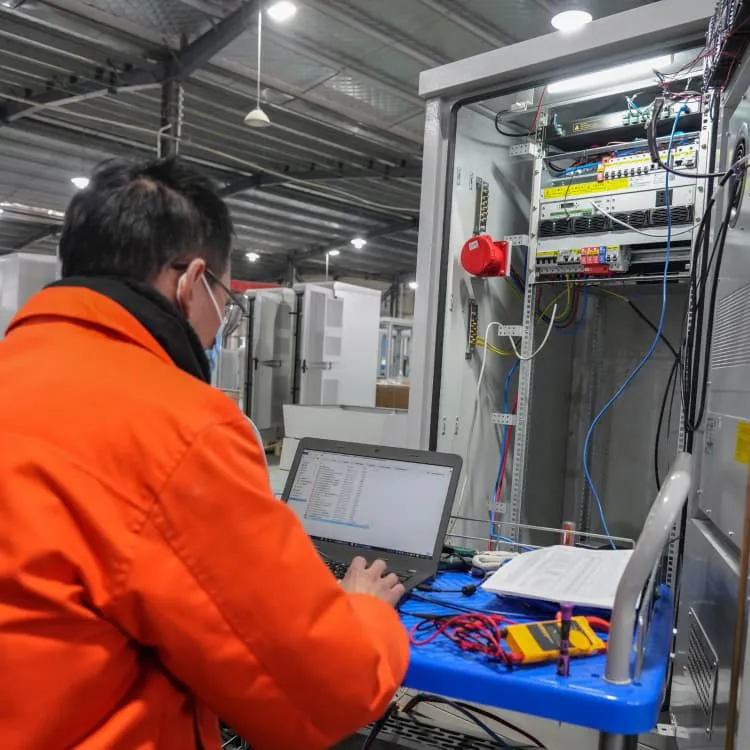
Air Water Cooler For Dry-Type Transformers in Offshore Wind Power
In the rapidly growing field of offshore wind power, ensuring the reliability and efficiency of power generation equipment is crucial. Dry-type transformers, often installed within the towers of
FAQs 6
Do wind turbines need a water cooling system?
Key components in wind turbines, such as gearboxes, generators, converters and power packs, become less effective as they heat up during use. So keeping them at the right temperature is crucial if you want to get the best performance out of your wind turbine. Water cooling systems are pressurised and require a sealed expansion tank.
How wind turbine cooling system works?
As previously described enough wasted heat produce in wind turbine especially in MW turbine. In this study, a conceptual design of a new wind turbine cooling system is proposed. In this system, the heat which is generated by wind turbine using a coolant comes to ORC cycle and gives the heat into the refrigerant.
How to cool a wind turbine?
Through the years challenges of cooling systems for wind turbine caused the new cooling systems. A simple way to cooling the turbine is using the small part of inlet air to the nacelle and filling the needed part and finally exhausting the air from nacelle . These days in MW wind turbines use oil or water for cooling.
Can a 750 kW wind turbine be cooled?
As to large- and medium-scale wind generating set with power more than 750 kW, a liquid recirculation cooling method can be implemented to satisfy the cooling requirement . Regarding MW wind turbine with a larger power capacity, the gearbox, generator and control converter all produce comparatively large amount of heat .
Why do wind turbines need a cooler?
Key components in your wind turbines become less effective as they heat up during use. Keeping your gearboxes, generators, converters and power packs at the right temperature is crucial if you want to get the best performance out of your wind turbine. We design, manufactire and test the coolers at our facility.
Which heat source is used as coolant for wind turbine cooling system?
As a first study and based on previous studies for ORC heat source which comes from wind turbine cooling system 80 °C temperature is selected as minimum. Table 1 shows the simulation condition and results. The Water is used as coolant in this simulation.
Random Links
- Super large 4 pieces of 60 watt solar panels
- Western European photovoltaic solar power generation system
- Iranian energy storage module equipment
- Which lithium battery pack is best in Cyprus
- Spanish solar photovoltaic modules
- What are the hybrid energy storage power stations in Abkhazia
- Maldives makes energy storage cabinets
- Greek rural photovoltaic energy storage
- Cambodia single-phase photovoltaic inverter manufacturer
- Southern Europe Photovoltaic Energy Storage Project
- What is the power supply for 5G base stations
- Energy storage liquid cooling anti-condensation
- Battery cabinet assembly site
- Romania PV module prices
- Volt DC to AC inverter
- Inverter outdoor energy storage
- Buy lithium battery packs in Türkiye
- Cook Islands Regular Photovoltaic Panel Construction Manufacturer
- Uruguay Communication Base Station Battery Management Regulations
- Mobile power 220v box
- Albania Energy Storage Photovoltaic System
- Uganda s new outdoor power supply
- Guinea Industrial and Commercial Energy Storage System Manufacturer
- What are the energy storage power sources in Costa Rica
- Morocco Household Energy Storage
- Seychelles photovoltaic combiner box direct sales
- Yemen 5G communication base station 5MWH liquid cooling can be built
- Tuvalu 21kwh lithium battery pack purchase
- Marshall Islands Home Energy Storage Power Wholesaler
- 4kw inverter input current